
Your guests may be able to see every smile at the altar, but without a thoughtful audio plan, they could miss the words that matter most. Wedding ceremony microphones should make the officiant, vows, readings, and music easy to hear without drawing attention away from the ceremony itself.
The best setup depends on your venue, guest count, ceremony format, weather exposure, and recording plans. Rather than choosing equipment on your own, use this guide to have a detailed conversation with your venue and professional audio or entertainment provider. They can select, position, and operate the system while you focus on getting married.
Compare the Main Wedding Ceremony Microphone Options
Each microphone style has practical advantages and limitations. Many ceremonies use more than one type so the officiant, couple, readers, and musicians are covered appropriately.
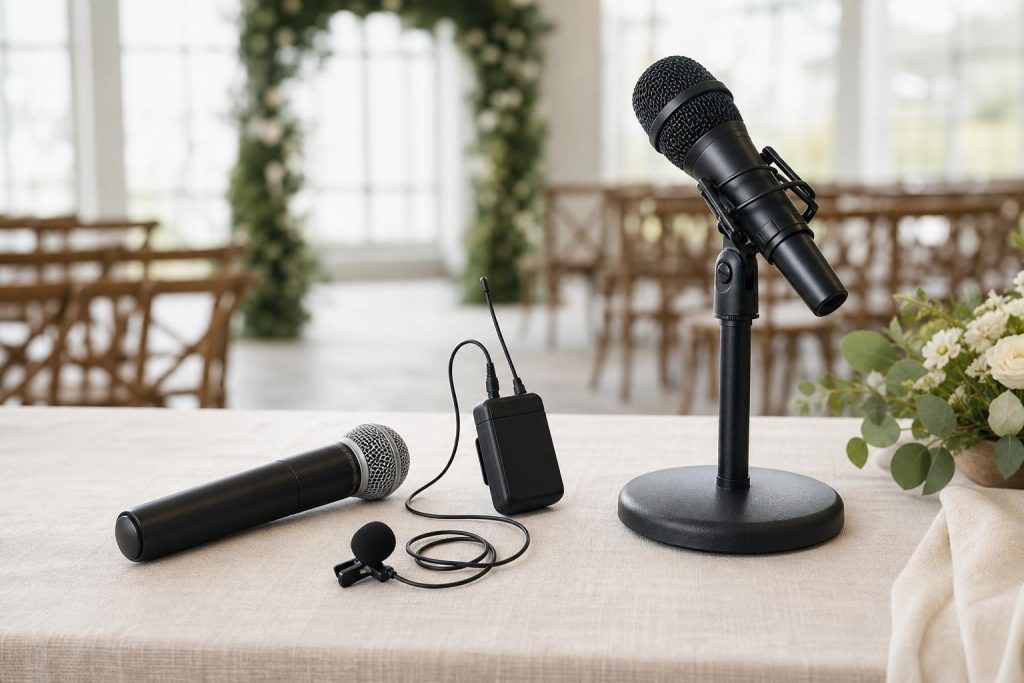
Lapel microphones: A small lapel, or lavalier, microphone clips to clothing and connects to a wireless transmitter. It keeps hands free and is visually subtle, making it a common choice for officiants. Depending on where everyone stands, one well-positioned lapel microphone may also pick up the couple’s vows. However, it can capture clothing rustle, wind, or a quiet speaker unevenly. Formalwear without a stable clipping point may also require a different approach.
Handheld microphones: A handheld microphone generally provides clear, focused sound when held close to the speaker’s mouth. It works well for readers, singers, and couples comfortable passing or holding a microphone. The tradeoff is visibility. It also requires each person to maintain a useful distance from the microphone rather than lowering it toward their chest.
Microphones on stands: A stand-mounted microphone leaves hands free and can serve readers, vocalists, or musicians in a fixed location. A stand may be less convenient for two partners with a height difference, and people must step into the correct position before speaking. Its placement should be rehearsed so no one bends awkwardly or turns away while reading.
A shared microphone: One handheld or stand microphone can cover several participants in a short, simple ceremony. This reduces equipment at the altar, but transitions must be planned. A shared microphone can create silence or handling noise if no one knows who moves it between the officiant, couple, and reader.
Assign Audio Coverage to Every Ceremony Participant
Start with the ceremony outline rather than the equipment list. Identify every moment involving speech or live performance, including the welcome, vows, ring exchange, readings, unity ritual, announcements, and recessional instructions.
- Officiant: Usually needs hands-free coverage because they may hold notes, cue the couple, or handle ceremonial items.
- Couple: May share the officiant’s microphone, use a handheld microphone for personal vows, or receive separate discreet coverage.
- Readers: Often benefit from a fixed microphone at a lectern or a handheld microphone passed to them before they begin.
- Musicians and vocalists: Need inputs suited to their instruments and performance style. A microphone intended for speech may not be the right tool for a singer, keyboard, guitar, or string ensemble.
- Interpreter or additional officiant: Should have dedicated coverage or a clearly rehearsed sharing plan.
Give your provider a written ceremony order with names, positions, and speaking moments. A streamlined version of a wedding MC cue sheet can help the ceremony team anticipate each transition instead of reacting after someone starts speaking.
Plan Speaker Placement for Clear, Even Sound
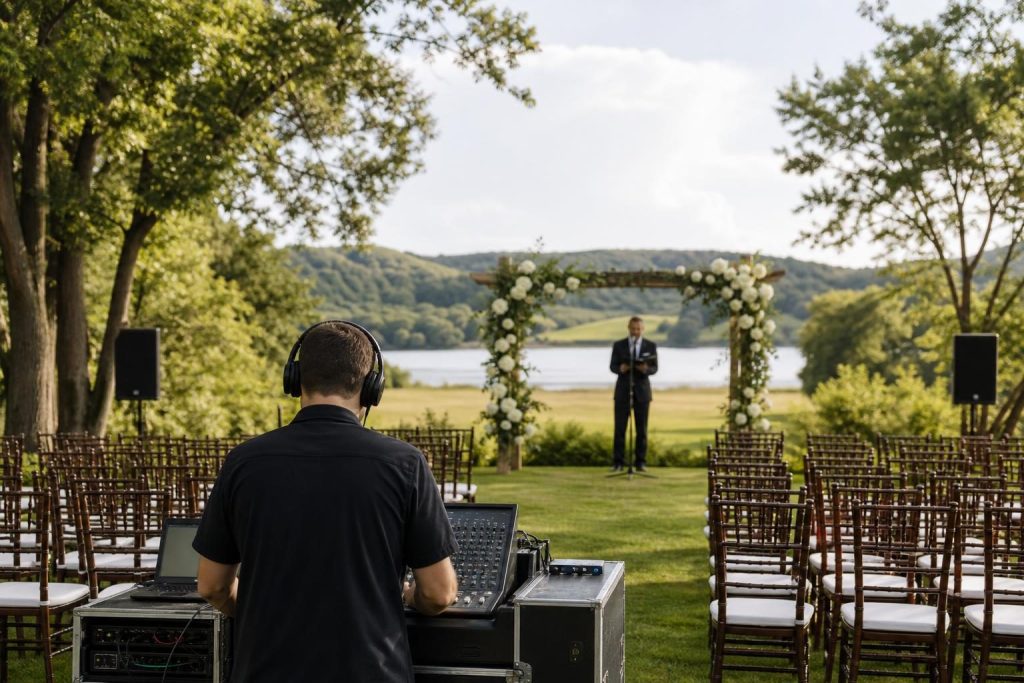
Microphones capture the ceremony, but speakers deliver it to your guests. Speaker placement affects both clarity and the risk of feedback—that sharp ringing or squealing sound created when a microphone picks up amplified audio from a speaker.
As a general planning principle, ceremony speakers should project toward the audience while remaining appropriately separated from live microphones. Your audio professional should determine the exact locations based on the room or site. Ask whether guests in the back row will receive comparable coverage to those near the aisle and whether columns, walls, landscaping, or seating sections could block sound.
A single speaker may be adequate for a small gathering, while a wider or deeper seating plan may call for multiple carefully balanced speakers. More volume is not automatically better. Even distribution usually feels more natural than blasting the front rows in an attempt to reach the back.
Venue acoustics matter, too. Hard walls, high ceilings, glass, and stone can create echoes, while open outdoor spaces allow sound to dissipate. Share your estimated guest count and final chair layout with the provider. If the ceremony and reception use different locations, confirm whether each area has separate equipment and enough transition time.
Prepare for Wind, Weather, and Visual Details
Outdoor ceremonies require extra attention because wind can overwhelm otherwise clear speech. Ask your provider about wind protection for microphone capsules and where equipment can be positioned to reduce direct exposure. A microphone shielded by the officiant’s body may perform differently from one facing an open field, beach, or rooftop.
Discuss a rain plan even when the forecast looks favorable. Confirm what happens to audio equipment if the ceremony moves indoors or under a tent, who makes that decision, and how much relocation time is needed. Electrical connections and technical equipment should always be handled by the responsible venue or audio professionals—not members of the wedding party.
If microphone visibility concerns you, mention that before the wedding day. Lapel microphones can often be placed neatly on a jacket, dress, stole, or other stable garment, but concealment should never come at the expense of muffled sound or fabric noise. Beltpack transmitters also need a secure location. Tell your provider about delicate fabrics, outfit changes, cultural attire, or ceremonial garments that may affect placement.
For more considerations involving processionals, timing, and the ceremony environment, review these wedding ceremony planning dos and don’ts.
Schedule a Real Sound Check and Discuss Recording
A sound check should happen after the principal equipment is in place and, whenever possible, under conditions similar to the ceremony. Testing an empty ballroom hours earlier may not reveal every issue created by guests, open doors, wind, or a changed seating layout.
The officiant and anyone delivering a reading should practice speaking at a natural volume. If you are sharing a handheld microphone for vows, rehearse how it will be passed and where it should be held. You do not necessarily need to read your private vows during the test; a few neutral sentences are enough to confirm levels and positioning.
Ask who will actively monitor the ceremony. A system that was working during setup may still need adjustments when a soft-spoken reader approaches or wind conditions change. Confirm whether the operator can mute unused microphones to limit handling noise, side conversations, and feedback.
Video recording requires a separate conversation. Sound that is clear through guest speakers is not automatically captured cleanly by a camera. Ask your videographer and audio provider how they plan to coordinate an audio feed, onboard recording, or independent backup track. They should also agree on connection and testing responsibilities in advance. Avoid assuming that one vendor’s equipment will automatically connect to another’s.
Create a Backup Plan Before the Ceremony Begins
Reliable ceremony audio is built on preparation rather than a single piece of equipment. Ask your provider what backup options are appropriate for the location and format.
- Are fresh batteries installed, with replacements immediately available?
- Is there a spare microphone ready if a wireless unit develops interference?
- Can the ceremony continue with a wired or stand-mounted option if needed?
- Who will discreetly hand a backup microphone to the officiant or reader?
- Will the setup work if the ceremony moves to the designated weather location?
- Who has the final ceremony timeline and knows when each microphone is used?
The concise takeaway is simple: choose microphones around the people and moments in your ceremony, place speakers for even audience coverage, rehearse microphone movement, coordinate recording separately, and give a professional ownership of the sound system and backup plan.
Felix & Fingers brings audio coordination experience to interactive wedding entertainment, including the transitions that connect a meaningful ceremony with the celebration that follows. To discuss your wedding plans, call (800) 557-4196 or request an instant quote.