A dependable wedding toast audio setup does more than make speeches louder. It gives each speaker a comfortable place to stand, helps guests follow every story, and keeps the reception moving without awkward technical pauses. The essentials are straightforward: choose an appropriate microphone, identify the speaking position in advance, test introductions and names, coordinate with catering, and assign one person to manage each handoff.
These decisions should be made with your venue, entertainment team, planner, and caterer rather than left until someone taps a microphone after dinner. Here is how to build a plan that feels polished while allowing the toasts themselves to remain personal and spontaneous.
Choose a Speaking Position Before Guests Enter
The best place for a toast-giver is usually where they can see the couple and most guests without standing directly in front of a loudspeaker. Depending on the room, that may be beside the couple’s table, near the dance floor, or at the edge of the entertainment area.
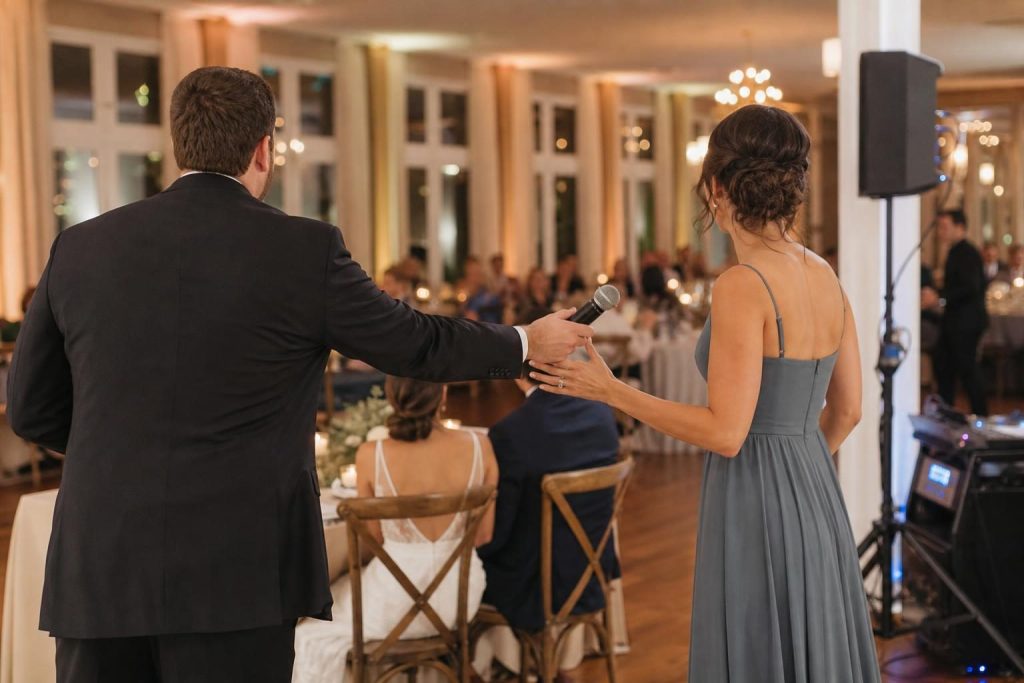
Ask your audio provider where the main speakers will be placed. A live microphone positioned in front of a speaker can increase the likelihood of feedback, especially when the speaker turns, lowers the microphone, or walks around. The entertainment team can identify a practical boundary that keeps the microphone in a more stable area.
The speaking position should also account for:
- Sightlines: Avoid columns, large floral arrangements, open doors, and catering stations that block guests’ views.
- Walking distance: A parent or attendant should not have to navigate the entire ballroom while everyone waits.
- Photography and video: Leave a clean angle for the photo and video teams without placing the speaker in a busy service path.
- Lighting: Make sure the selected area will remain illuminated after dinner lighting is lowered.
- Accessibility: Choose a route and position that work comfortably for every scheduled speaker.
Outdoor and tented receptions require another layer of planning. Wind, generators, uneven ground, and strict property rules can all affect microphone and speaker placement. Confirm any restrictions early, using questions such as those in our guide to wedding venue sound limits.
Select a Microphone Format That Supports the Speaker
A wireless handheld microphone is often the most flexible option for wedding toasts. It can be passed between speakers, permits natural gestures, and does not require each person to stand at a lectern. Its flexibility also means the MC should offer one quick instruction: hold the microphone a few inches from the mouth and keep it there while speaking.
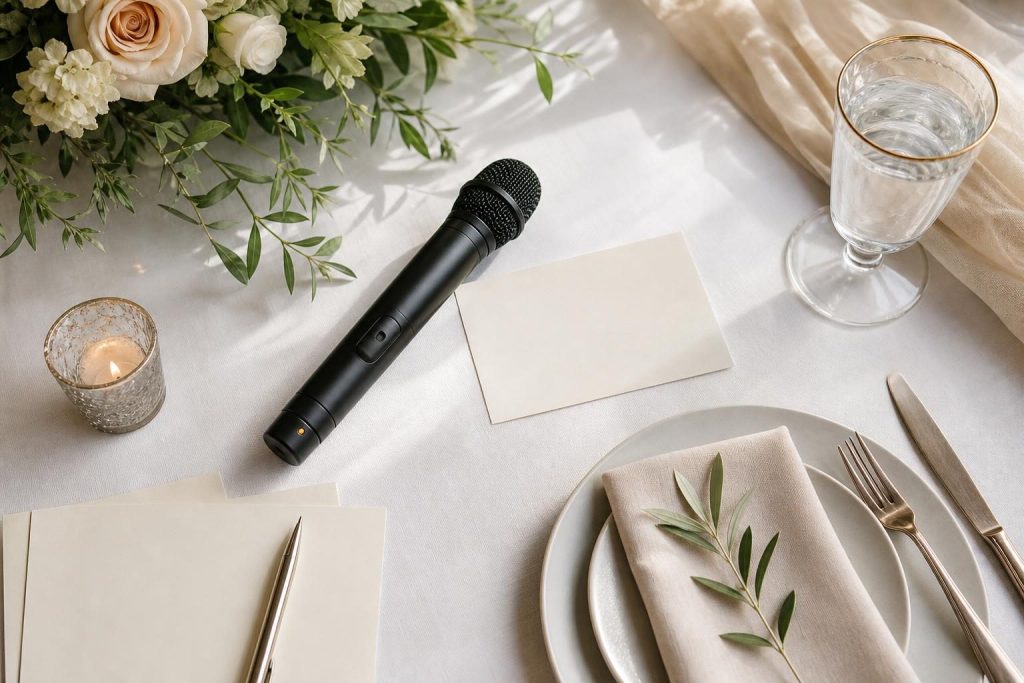
People commonly lower a handheld microphone toward their chest, turn their head away from it, or wave it while gesturing. Guests then hear alternating loud and quiet phrases. A simple demonstration immediately before the first toast is generally more helpful than a long technical explanation.
A wired handheld microphone can deliver dependable performance when the speaking location is fixed. The tradeoff is the cable, which limits movement and must be routed carefully. A microphone on a stand works well for speakers who want both hands available or need notes, but the height should be adjusted between people. If the microphone remains too low, a tall speaker may lean uncomfortably or drift out of range.
Lapel microphones are useful in some productions, but they are rarely the simplest choice for a short series of reception toasts. Clipping and removing one for every person takes time, clothing can rub against it, and private conversations may be captured if it remains active. Unless there is a specific production reason to use one, a handheld microphone is usually easier to manage.
Whatever format you choose, confirm that a backup microphone or another practical contingency is available. It does not need to be visible to guests; it simply needs to be accessible to the person overseeing audio.
Test More Than “One, Two”
A useful sound check recreates the actual toast conditions as closely as possible. The entertainment or audio team should test the chosen speaking position, check the microphone at realistic speech volume, and listen from several areas of the room. A level that sounds clear beside the dance floor may be less intelligible beneath a balcony or at the back of a long reception space.
The MC should also rehearse the spoken introductions. Provide each toast-giver’s full name, relationship to the couple, preferred title, and pronunciation. Include phonetic notes when helpful. Names should be checked directly with the person or couple rather than guessed during the reception.
Complete this review before guests enter when possible. If a scheduled speaker is available, let them hold the microphone briefly and see where they will stand. Nervous toast-givers often feel more settled once they know how to approach the space and where to look.
A sound check is not the time to rehearse every speech. Its purpose is to verify the equipment, position, volume, names, and sequence. Keeping that distinction preserves the warmth of the moment while removing avoidable uncertainty.
Coordinate Toast Timing With Catering
Reception speeches compete with more than music. Plates are being cleared, glasses are being filled, catering doors are opening, and staff members may be moving carts or stacked dishes. Even an excellent microphone cannot completely overcome a room full of service noise.
Ask the catering captain when the team can provide a brief pause in active service. Toasts often work well once guests have food but before widespread clearing begins, or after the final dinner course has been served and the room has settled. The ideal moment depends on whether dinner is plated, buffet-style, family-style, or station-based.
Avoid starting while a substantial number of guests are standing in a buffet line. They may miss the opening, and their movement can pull attention away from the speaker. For plated dinners, do not assume the final table has been served simply because the couple received food first. The MC should wait for confirmation from the catering captain or planner.
Keep the overall toast block proportionate to the reception. Give scheduled speakers a suggested duration in advance—often a few focused minutes rather than an open-ended slot. If several people want to speak, consider placing them in one organized block or inviting friends to collaborate on a shared toast. Build a little flexibility into the schedule, but avoid treating speeches as unlimited time.
Use the MC to Create Simple, Confident Handoffs
The MC’s job is not to turn each speech into a staged production. It is to make the transition feel obvious: gain the room’s attention, introduce the speaker correctly, place the active microphone in their hand, and step away.
Before the toast block, the MC should quietly confirm that the first speaker is present and ready. The next speaker can wait nearby without clustering around the microphone. At the end of each toast, the MC or designated attendant retrieves the microphone rather than asking speakers to decide who receives it next.
Music can help frame the moment, but it should not compete with the introduction. The entertainment team can fade the background music, allow the room to settle, and then give the MC a clear opening. After the final toast, the MC can thank the speakers and direct guests toward the next event, whether that is dinner, cake cutting, or dancing.
Write the order, pronunciations, and next transition in a short working document. Our guide to creating a wedding MC cue sheet can help organize those details without scripting every word.
A Concise Wedding Toast Plan
For clear, comfortable speeches, settle six points before the wedding day:
- Choose one visible, accessible speaking position away from the front of loudspeakers.
- Select a handheld, stand-mounted, or wired microphone based on the room and speakers’ needs.
- Test the microphone from the actual position and listen throughout the guest area.
- Confirm every name, pronunciation, relationship, and speaking order.
- Ask catering when service noise and guest movement can pause.
- Assign the MC or another specific person to manage introductions, microphone handoffs, and the transition afterward.
The key takeaway is that good toast production should be nearly invisible. Guests hear the words, speakers know where to go, and no one has to troubleshoot in front of the room. Couples considering interactive live entertainment can learn more about Felix & Fingers weddings. To discuss your reception plans, contact Felix & Fingers at (800) 557-4196 or request an instant quote.