
The final 30 minutes of a wedding reception can feel either celebratory and complete or hurried and confusing. The difference is usually a clear end of wedding reception plan. By deciding when to announce last call, stop taking requests, gather guests, play the closing song, and begin departures, you can protect the energy of the dance floor without running into the venue curfew.
You do not need to choreograph every second. You do need a shared sequence that your planner, entertainment team, photographer, venue manager, transportation provider, and wedding party understand. Here is how to build one.
Start With the Venue’s True End Time
Your contracted reception end time may not be the same as the moment everyone must be out of the building. Ask the venue exactly when music must stop, when bar service ends, when house lights come up, when guests must leave, and when vendors must finish loading out.
Sound limits can also affect the final stretch. Some venues require amplified entertainment to end before other reception activities, particularly outdoors or near residential areas. Review these details early and confirm them again with the venue manager. Our guide to wedding venue sound limits covers useful questions to ask.
Vendor pack-down requirements matter too. Musicians, rental teams, florists, and production crews may need access to loading areas or elevators on a strict schedule. Guests lingering around equipment can slow the process, so establish a separate gathering place if you want conversations to continue after the music ends.
Winter weddings deserve extra departure time. Coat-check lines, icy walkways, rideshare delays, and shuttles boarding in cold weather can make an otherwise smooth farewell feel abrupt. Consider moving transportation reminders and coat pickup earlier rather than shortening the final dance.
Use a Flexible 30-Minute Closing Timeline
A practical closing sequence might look like this:
- 30 minutes remaining: Make the final bar-service announcement, if needed, and remind guests about transportation.
- 25 minutes remaining: Accept the last song requests and alert the photographer that the finale is approaching.
- 20 minutes remaining: Build the dance floor with familiar, inclusive music rather than introducing a major interruption.
- 10 minutes remaining: Announce the final dance sequence and quietly organize anyone involved in an exit.
- 5 minutes remaining: Play the planned closing song or invite everyone into a final group moment.
- At closing: Direct guests toward transportation, an exit location, or the next approved gathering space.
Treat these times as working markers, not rigid rules. A last-call announcement may need to happen earlier under venue policy, and a complicated send-off may require 15 minutes to organize. Put the final sequence into a shared wedding MC cue sheet so each vendor is working from the same plan.
Coordinate Last Call, Final Requests, and Announcements
Too many announcements can drain momentum. Whenever possible, combine practical information into one short, friendly message. For example, the MC can note that bar service will conclude soon, identify the shuttle pickup location, and invite final song requests without repeatedly stopping the music.
Choose one person to approve any change to the closing timeline. That may be the planner, venue captain, or designated family member—not necessarily the couple. This prevents multiple people from giving the entertainment team conflicting instructions during the busiest part of the evening.
Set a cutoff for requests. Interactive live entertainment thrives on guest participation, but the performers still need room to shape a satisfying finish. A request submitted two minutes before closing may not fit the mood, available time, or couple’s preferences. Mark the final 20 to 25 minutes as a curated closing set while leaving some flexibility for a request that suits the moment.
Choose Closing Songs That Create a Clear Finish
Your last song should communicate that something special is ending. An energetic anthem can keep the room full until the final note, while a sentimental selection can create a warm group singalong. Either approach works when it reflects you and gives guests an obvious emotional conclusion.
Consider planning two closing songs: a high-energy selection that gathers everyone onto the floor, followed by a final song with a more conclusive feel. This creates a natural arc and provides a backup if the timeline runs short. Tell the entertainment team which song is nonnegotiable and which one can be removed if the venue needs to close promptly.
Avoid announcing the last song too early. Guests who hear “final song” with 15 minutes left may begin collecting coats and saying lengthy goodbyes. Keep the dance floor active, then make the announcement shortly before the true finale.
Decide Between a Private Last Dance and a Staged Exit
A private last dance gives the couple a quiet minute in the reception space after guests leave. It can be meaningful, but it requires coordination. Guests must have somewhere specific to go, and the photographer, entertainment team, and venue need to know whether they should remain present. Clarify whether “private” means completely alone or simply without guests.
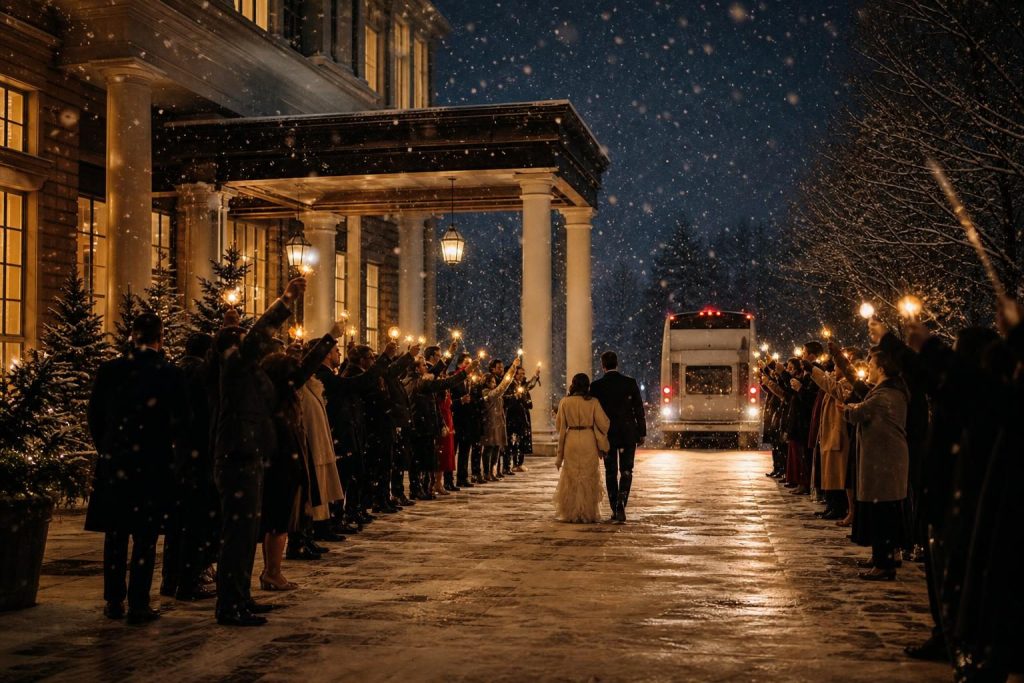
If you also want a staged exit, send guests to the exit area while the private dance takes place. Assign attendants or the planner to distribute approved props and arrange people. Confirm what the venue permits; some locations restrict flames, confetti, rice, or items that create cleanup issues. Battery-operated lights, ribbon wands, bubbles in suitable weather, or a simple cheering tunnel may be easier alternatives.
The main tradeoff is time. Organizing a large group can interrupt the dance floor and prompt some guests to leave instead of waiting. If the photograph matters more than having every guest present, stage the exit earlier with your wedding party and immediate family, then return to the reception. If the shared experience matters most, keep the setup simple and provide clear directions.
Plan a Memorable Ending Without a Formal Send-Off
A formal exit is optional. Couples who prefer a relaxed ending can close with a circle on the dance floor, a final singalong, a thank-you announcement, or a last dance surrounded by loved ones. You might also transition directly into a lobby gathering, hotel-bar meetup, or shuttle departure if the venue allows it.
House-light changes can support this transition, but they should be gradual. Bringing all the lights up during the final note can feel harsh. Ask whether the venue can raise lighting after the song ends, first illuminating the room and then the exits. At the same time, the MC can remind guests where to find coats, restrooms, shuttles, rideshare pickup areas, and personal belongings.
For transportation, provide the last shuttle time in at least two ways: an earlier announcement and visible information near the exit or bar. Designate someone other than the couple to check that key family members and wedding-party participants know when to board.
The concise takeaway is simple: work backward from the venue’s hard stop, reserve the final 10 minutes for your closing experience, and give every vendor the same written sequence. Protecting that small block of time will help the reception feel complete rather than cut off.
Felix & Fingers coordinates interactive wedding entertainment with the flow of each couple’s reception in mind. To discuss your music and closing plan, call (800) 557-4196 or request an instant quote.