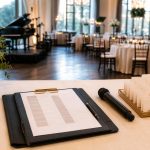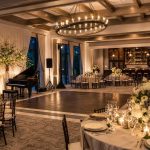
Planning wedding entertainment for multiple rooms requires more than choosing songs for each part of the day. Every transition creates practical questions: Can guests hear the announcement to move? Will music continue while equipment is relocated? Are the ceremony and reception sound systems independent? Who signals the wedding party before an entrance?
The best approach is to treat the venue as a sequence of connected experiences. Map where guests will be, decide what they should hear in each location, and assign responsibility for every transition. That preparation helps your ceremony, cocktail hour, dinner, and dancing feel like one celebration rather than four unrelated events.
Map the Wedding as a Guest Journey
Start with a venue diagram and trace the route an average guest will take. Include the ceremony location, cocktail area, dining room, dance floor, restrooms, patios, elevators, hallways, and any weather backup spaces. Note stairs, narrow doors, long walking distances, and areas where guests may naturally stop.
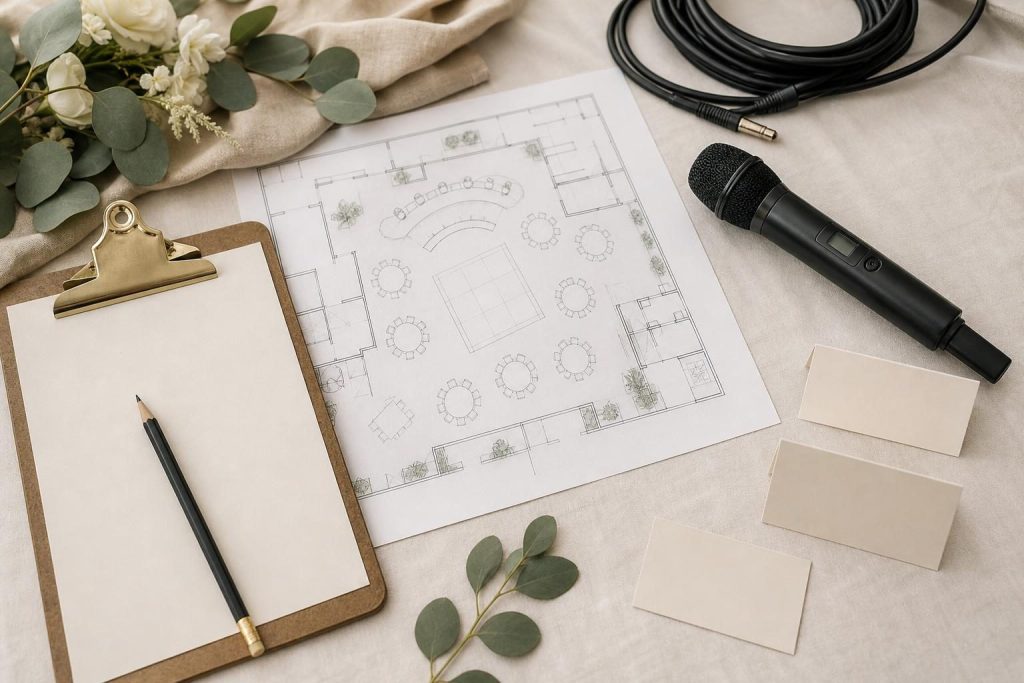
Then build a simple space-by-space entertainment map:
- Ceremony: Prelude music, processional cues, microphones, readings, vows, and recessional music.
- Cocktail hour: Background music or live performance, plus any announcement inviting guests to dinner.
- Dinner: introductions, welcome remarks, toasts, meal music, and special dances if they happen there.
- Dancing: featured entertainment, dance music, requests, formal moments, and the final send-off announcement.
For each phase, record the location, start time, sound source, microphone needs, and person authorized to begin it. This reveals conflicts early. For example, performers cannot provide live cocktail music in one building while simultaneously moving and testing all their equipment in another.
Identify Audio Coverage Gaps Before the Wedding
Venue spaces that look connected on a floor plan may be acoustically separate. Closed doors, thick walls, outdoor courtyards, elevators, and long corridors can prevent guests from hearing even a clear announcement in the main room.
Walk the venue while imagining where guests will actually stand. Check the back row of the ceremony, cocktail-hour corners, the bar line, dinner tables farthest from the speakers, and any patio that will remain open during dancing. Ask whether the venue has installed speakers, how those zones are controlled, and whether your entertainment team may connect to them.
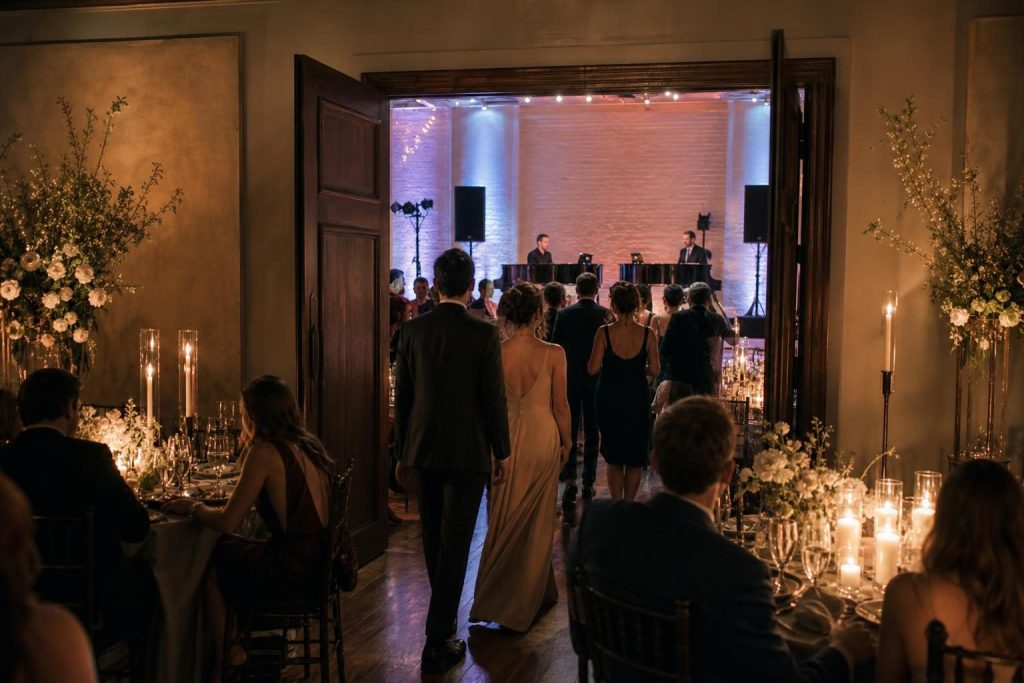
Do not assume that louder is the answer. Raising the volume in one room can make nearby tables uncomfortable without reaching a separate room at all. A secondary speaker, independent sound zone, or in-person cue may be more effective. Venue restrictions also matter, particularly when entertainment moves outdoors. Confirm decibel rules, speaker placement requirements, and end times using this guide to wedding venue sound limits.
Ceremonies deserve their own audio review. Officiants, readers, musicians, and couples may need different microphone arrangements, especially outdoors. The article on wedding ceremony microphones offers additional planning details.
Choose Between Equipment Moves and Secondary Setups
There are three common ways to cover a multi-space wedding: move one system, install separate systems, or use a hybrid plan. Each has tradeoffs.
Moving one setup can reduce the amount of equipment required, but it needs enough time and a clear route. Breakdown, transport, reconnection, sound checks, stairs, weather, and guest traffic all affect the schedule. A nominal 15-minute room change may not provide 15 usable minutes for the entertainment team.
Separate setups offer smoother continuity because ceremony or cocktail equipment can remain in place while the main reception system is ready elsewhere. This is often useful when spaces are far apart or when guests move directly from one phase to the next. The tradeoff is additional equipment, setup time, power access, and possible cost.
A hybrid plan might use a compact ceremony system, a small cocktail speaker, and a complete dinner-and-dancing setup in the reception room. It can provide continuity without duplicating every component.
Ask your entertainment provider what must remain with the performers and what can be prepared in advance. Live instruments, playback devices, microphones, mixers, lighting, and cables have different relocation requirements. Also confirm load-in access, carts, parking, elevators, power outlets, rain protection, and storage for cases.
Give Each Space a Clear Entertainment Purpose
Not every room needs the same volume or performance style. Matching entertainment to the purpose of each space creates better energy than trying to make the entire property feel like a dance floor.
During the ceremony, clarity and timing matter most. Cocktail hour usually benefits from welcoming music that supports conversation and signals that the celebration is underway. Dinner audio should allow announcements and toasts to be understood without overwhelming tables. Once dancing begins, the entertainment can become more interactive and focused.
If dinner and dancing occur in separate rooms, consider how the dining room will feel after guests are invited to the dance floor. Leaving soft music there can accommodate guests who want to continue talking, but it may also divide the party. Closing the bar in the dining room or opening dessert near the dance floor can encourage movement, subject to the venue and catering plan.
Speaker and performer placement also influences participation. Entertainment tucked behind a wall or around a corner may feel disconnected even when it sounds fine. Review the reception floor plan with sightlines, dance-floor access, and guest interaction in mind.
Assign Transition Cues and Announcement Responsibilities
A multi-room timeline should identify more than start times. It should state who confirms that the next space is ready, who gives the cue, who makes the announcement, and what happens if the schedule changes.
For every major transition, include:
- The person with final approval to proceed, such as the planner or venue captain.
- The exact cue, such as doors opening, catering clearance, or the couple reaching a staging point.
- The person responsible for the announcement.
- The locations where that announcement must be heard.
- A backup method for guests outside speaker coverage.
For example, an MC may announce dinner from the cocktail area while venue staff open the dining-room doors and direct guests at two hallway intersections. Older relatives or guests with mobility considerations can be quietly notified first so they do not feel rushed.
Keep announcements short and specific. Instead of saying, “We’ll be moving shortly,” tell guests which doors to use and what awaits them. For coordinated introductions, toasts, and dances, prepare a written wedding MC cue sheet with names, pronunciations, locations, and decision-makers.
Rehearse the Transitions, Not Just the Ceremony
Before the wedding, conduct a final walkthrough with the planner, venue representative, and entertainment lead when possible. Stand where the performers and speakers will go. Follow the guest route, time equipment moves, test doors and elevators, and verify power availability. If installed venue audio will be used, confirm connection details rather than waiting until the event.
Review contingency plans as well. If cocktail hour moves indoors because of weather, determine whether that room has appropriate sound coverage and whether it affects reception setup. If dinner runs late, decide which formalities can shift without creating a rushed room change.
The concise takeaway is simple: assign every space a purpose, every sound need a solution, and every transition an owner. Guests do not need to see the logistics, but they should always know where to go and never have to wonder whether they missed an important moment.
Felix & Fingers can help you think through interactive live entertainment, announcements, performer placement, and sound continuity across a multi-space venue. Call (800) 557-4196 or request an instant quote to start planning.