Listen to the Podcast About Morning Shade Farm
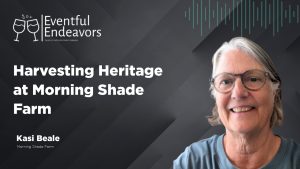
Podcast Summary
In an enlightening episode of Eventful Endeavors, host Katie Louise had an intriguing conversation with Kasi Beale, the passionate owner of Morning Shade Farm located in South of Canby, Oregon.
In the discussion, Kasi shared the inspirational story of how she and her husband transformed a neglected, overgrown property into the thriving Morning Shade Farm. Purchased in 1992, the once forlorn land now basks in intricate blueberry plantations and a charmingly restored farmhouse.
However, the fascinating journey of Morning Shade Farm was not without its fair share of challenges. Kasi candidly spoke about an ordeal they faced with Clackamas County. After refurbishing the dilapidated farm house with the intention of selling it along with a couple of acres of land, a rule change by the county left them disallowed from doing so. Despite these hurdles, traits of resilience and determination were clearly displayed by the Beales as they grappled with this unexpected bureaucratic change.
Kasi’s tale serves as both a captivating journey of transforming Morning Shade Farm and a stark portrayal of the bureaucratic hurdles that farmland owners might face in Oregon. This conversation between Kasi Beale and Katie Louise provided an authentic insight into the behind-the-scenes reality of farm living and management, positioning Morning Shade Farm as a beacon of resilience and determination in the face of adversity.
Learn more about
Morning Shade Farm
This interview was provided by
Felix and Fingers Dueling Pianos
Podcast Transcript
Katie (00:22)
Hello everyone, this is Eventful Endeavors. I am your host, Katie Louise. I’m here today with Kasi Beale from Morning Shade Farm. Kasi welcome to the podcast.
Kasi (00:33)
Hi, thanks for having me.
Katie (00:34)
So Kasi and I met over the phone a couple of weeks ago. Kasi, tell us about Morningshade Farm. So what what town are you in? How long have you owned it? Tell us a little bit about yourself.
Kasi (00:45)
we’re south of Canby, Oregon, about seven miles. And my husband and I bought this property in nineteen ninety-two and it was kind of an overgrown. It had belonged to an elderly couple, so it was neglected. and we cleared the land and planted blueberries and fixed up the old farmhouse originally.
Clackamas County had told us we’d be able to sell that house in a couple acres, but then so we fixed it up, which we we were gonna tear it down. And then they told us that they changed their rule after we went back and said, Okay, we’re ready to sell it with two acres. They vacated their own rule and didn’t grandfather us in. So that was a bit of a nightmare because we had sunk all our
Katie (01:28)
interesting.
Kasi (01:34)
capital into fixing up this tear down house.
Katie (01:36)
So you you were
you weren’t able to sell a house? The c the
Kasi (01:40)
Well, so
in in Oregon, farmland is that’s zoned for farmland has restrictions on what we can do. And so w I mean we knew that it we knew it was EFU zoned when we bought it, but we went in to apply for the permit to tear down that house. And the county person told us that they had this rule they showed us, they gave us a copy of it that said
Katie (01:47)
I see.
Kasi (02:05)
we could partition the house and two acres off and sell it. It’s a seventy-eight acre property. And we’re like, well, okay, that that would be good ’cause, you know, get a little money back out to build with ’cause we always intended to build a new house here. So we but they said, well, a couple of things you have to be living there. And it it was actually a pretty it was a tear down house. It had been used for migrant housing.
It was in, you know, pretty pretty much horrible shape. We basically moved in and gutted the place and fixed it up. And then went back. So that took us, you know, four or five months. And then we went back to the county and said, okay, now we’re applying to partition it off with the two acres, like you told us under your rule. And then it turned out that Thousand Friends of Oregon one of our neighbors was connected up with them and
County sent out a notice saying we were trying to partition the property, which I think some people may have interpreted as splitting it up into small acreages or something, which wasn’t what we were doing. But anyway, so they the county allows other people to protest on your land use applications. So someone pro protested this old lady that we didn’t even know down the road, didn’t even come and talk to us and ask us what we were trying to do or anything.
Katie (03:17)
Wow.
Kasi (03:27)
And so the county said, well, okay, we’ll throw our rule out. Basically, that’s the short version of the story. Anyway, and we said, well, wait a minute, you you you encouraged us. We dumped a lot of capital into fixing up this house, and now you’re telling us we can’t do what you told us we could do. So we we took it to we took them to
Katie (03:35)
man.
Kasi (03:53)
the land use board of appeals and lost. so we were stuck then. We had put everything into fixing that house up because we thought we could sell it instead of tearing it down. And so we lived there for seven years. It was a tiny little house. I mean the kids’ bedroom I three kids, they were stacked in a seven by nine foot bedroom, you know, stacked literally.
Katie (04:10)
That is so frustrating.
Kasi (04:19)
and we lived there for seven years while we went on through another county process to split the eighty acres into two 40 acre pieces and be able to build on the back on the other 40 acre piece. So that took several years and of course, you know, legal costs. And meanwhile we cleared the land and
planted the blueberry fields and you know got the farm business started. And eventually the county, after a nightmare, another nightmare long process, gave us a permit to build our new house. And so then in nineteen ninety nine, we built the farmhouse that’s here now, that or that we live in now. And
Katie (05:04)
okay.
Kasi (05:06)
Then in 2012 we built the barn and a garage and you know started up being able to have it as both a venue and and then the blueberries, although we’re sort of lackadaisical about the venue. I only do maybe eight or ten weddings a year. It it’s just it’s a side gig, it’s not the main thing.
Katie (05:25)
Yeah.
Kasi (05:29)
our main thing is we have you pick blueberries and we have 10 acres in blueberries and then we have a bunch of other fruit and berries. And we do you pick and then we should pick them. marines and boisons and raspberries and elderberries and black currants and apples and pears and Asian pears and some plums, not too many.
Katie (05:37)
What other what other fruit do you have?
Do you sell,
I love Mary Ann Barry. Do you sell like the do you do any jams or like syrups or anything like that?
Kasi (05:57)
We make black currant jam and just because we both we have black currants and then I sell some. my brother also is growing black currants of like a half acre. So I make the we make the jam just to get people started on it because if you’ve ever tasted black currant jam you want more. And so
Katie (06:00)
cool.
I have never tasted
black currant jam. I’ve tasted Marion Berry and it’s it’s quite the most d it’s like the most delicious jam I’ve ever had. But black currant jam I have not. I have to try it.
Kasi (06:26)
Well, it I’d
I’d say black currant jelly comes pretty close, if not better. You know, it’s just a really different flavor c it’s common in Europe. And so we get for on the UPIC, we get a lot of we have such a wide variety of people that come for UPIC, you know, from all over. And it’s been fun to see it in
Katie (06:36)
okay.
So is that that that’s
like your your
bread and butter is the you pick?
Kasi (06:52)
It is now. My husband and I both worked full time when we were starting this place up. You can’t actually make a farm business without second income in Oregon anymore. Land is too expensive. it’s really it would be really difficult for someone without, you know, backup jobs to start a farm now. but
Katie (07:04)
Yeah.
So what was it like? Bring me back to nineteen ninety two or you know, even the years prior where you decided to do this. L you know, let tell me a little bit about it.
Kasi (07:22)
Well, Jim Jim and I always wanted to live out of the city. And we we finished college and moved to Portland in 1984 and we’re living and working up there and and looking for property and trying to save up money for a down payment. But I don’t know. It i in those years property values were just going up so much every year that
However much we saved for the down payment each year, the prices went up more than that. And so we kept kind of looking farther and farther out. And the other thing that’s kind of an effect of Oregon’s zoning rules is that if you’re looking for five acres or you’re looking for 20 acres, the price is not for 20 acres, is not normally four times the price of a five-acre place, and that’s because.
Katie (08:17)
Sure.
Kasi (08:18)
Typically it’s zoned that way and so you can it can’t be sold as a smaller acreage. So so anyway, we ended up finding Jim found this place and he brought me out here and I’m like, my it was a it you know we we literally had to climb a ladder to look around because it was so overgrown. but and the farmhouse was really nasty.
Katie (08:24)
Right.
Kasi (08:41)
But we thought, well, eighty acres, you know. I don’t know. We were just brave, I guess. Brave were stupid.
Katie (08:48)
When do you so when you and your husband were looking for a property, did you know you wanted to have a farm? Or were you just looking for a little bit Okay.
Kasi (08:53)
Yeah, we did. W well, we were
kind of not quite so ambitious as this. We were looking right. We were originally looking for a smaller place, but like we really liked the Stafford area, but you know what happened to prices up there. You just you know, people like us just you know, by the time we had any money for a down payment, we couldn’t catch it. Yeah. Yeah.
Katie (08:58)
That’s eighty eighty acres, right? Like
I mean it’s it’s it sounds like twenty twenty six to me, honestly. Yeah, yeah.
Kasi (09:18)
So so we were just chasing it and then we just thought, well, what the hell? I don’t know, we just it it it we knew it was a pretty property underneath the laws and it is.
Katie (09:33)
But it’s
scary, right? Like, okay, so you t said it was overgrown when you bought it. So wha was there any was there any produce there when you bought it? Anything planted?
Kasi (09:38)
yeah, yeah.
no, no. It
had it it had been planted as a nursery and then the guy with trees, like fir trees and pine trees, and then the person who owned it was elderly and unable to keep it up and didn’t get them sold. And so they were by then, you know, fifteen to twenty year old trees. So, you know, not big enough for a timber or anything.
planted too densely to grow out as a forest anyway, and that wasn’t what we wanted to do. So we did a lot of bulldozer work. And well, Jim did most of it. I was I had three kids. So, you know, and so you know, this it sounds I look back and think, how did we do it? But this, you know, it was spread over many years ’cause we were s
Katie (10:16)
Well, that must have been fun.
Yeah.
Kasi (10:32)
by then stuck in that house for those seven years. So the work to clear the land. So we’re only farming about we’re farming about 20 acres now out of the 80. The rest is you know kind of either in forest or it was in forest and now the trees are sick and dying because of that furbore. Or it’s
kind of swampy bottom land that there’s a creek that runs through that floods up in the wintertime. So not formable. And anyway, twenty acres is enough. I’m here to tell you, especially when you get to be my age.
Katie (11:07)
Yeah, sure.
Well so do you have employees running or is it
Kasi (11:10)
I have a I have
one full time in play year round or mostly year round. He gets a good long vacation at Christmas time. But and then we ha hire people to prune in the in February, a crew comes in and then pickers and then people working on the farm stand when the UPIC is open. So this place is really busy in June.
in Jul late June and through mid August. It’s pretty crazy busy here.
Katie (11:40)
And what what about your kids? Do your kids work on the farm?
Kasi (11:43)
Well, so that right
now, so my husband died two years ago. and so we’re just in the process of
switching over. I sold I sold the farmhouse to my daughter.
Katie (11:53)
Yeah.
nice. So she’s nearby.
Kasi (11:56)
And
yeah, they lived nearby anyway. And her husband had already bought a portion of the farm that was the nursery business from us about five years ago. And so they and their three kids are moving into the farmhouse now.
Katie (12:13)
Is it wait, is is it the same one that she grew up in? The tiny one? No
Kasi (12:16)
Yes. No, well, so
we know it’s the one we built. No but yeah. Yeah. So she lived in the tiny one from when she was, let’s say four to almost ten, I guess, and then lived in the big house after that.
Katie (12:21)
the one you bought.
It’s
it’s funny. It reminds me I I I bet she has like some special memories. You know, because it reminds me a little bit of Little House in the Prairie where like they’re all cramped in this tiny space, but then they have just like the biggest yard that you could ever imagine and and swamps and everywhere they can go out and play with, you know. They don’t they don’t need to be inside, right? They just just need to sleep and then they can go back.
Kasi (12:47)
Yeah.
Right. Well they got kicked out a lot because that house was crowded. Yeah.
Katie (12:58)
Yeah.
Kasi (12:58)
Yeah. No, she’s she’s definitely really she has a day job that’s you know more lucrative than farming, but she’s definitely committed to being here and raising her kids here and starting the next generation. Handing off the work of the farm is another thing though, because her husband’s already
Katie (13:10)
Yeah.
Kasi (13:19)
full on in the nursery, he can’t take on anymore really. He helps a lot on this farm besides the nursery work, but it sort of catches catch can, you know, it’s he can’t have, you know, he can’t take on the season. And my other kids are off on other things. So I’m still doing it. I’m
Katie (13:19)
Right.
Right. Yeah.
Kasi (13:41)
I’ll be seventy one this year and I really wanna I’m counting on d counting the years till my oldest grandson is old enough to you know, take my he’s eight. So I got a long wait. But
Katie (13:40)
Yeah.
Wow.
How old is your oldest grandson?
Well,
I mean yeah. I mean but you you know what? What you can start working at what, twelve in Oregon? I don’t know, what are the lots?
Kasi (14:04)
Yeah, you can on on
your own family farm you can start working when you walk. That’s pretty much it. When my kids were little and we were clearing the land, we spent so many hours out like picking up sticks because when you clear the trees out, it leaves a mess. But anyway, so they have that’s their earliest memories probably of this place. But yeah, and I have great employees. I’m really lucky both with the pickerks,
Katie (14:09)
Yeah. Yeah.
Yeah.
Kasi (14:32)
I have a good crew that comes back from year to year. I try to make sure we you know, pay a little better than other farms so they come back and and thank goodness for cell phones. Because it used to be when we first started and you’re getting pickers who are migrant people, you you couldn’t there was no way to call them back from year to year. So that’s been a huge change that I can stay in contact with
Katie (14:41)
Yeah.
Interesting.
Kasi (14:58)
people through the year. I used to have to just pray when it was time for pickers to show up. We’d hang signs out and, you know, hope things. But now it’s way better. And and I have a you know, just a core crew and you know sometimes they’ll bring cousins and stuff. So I you know I’ve been really lucky that way. And I you know a couple of
Katie (15:00)
Yeah.
Wow. That’s so fascinating.
Gotta you gotta start saying
so anyone wanna buy the farm or go move in with my daughter, right?
Kasi (15:24)
Yeah. well I can’t I it’s the farm and the house aren’t
back to the story of splitting off the forty acres, it’s you can’t sell them independent of each other. So they’re they’re stuck together. She’s basically she bought in and so she’s now a co owner of the whole place and that was a way to I’m I’m gonna go back and build a new house.
Katie (15:38)
interesting.
Gotcha.
Yeah.
Kasi (15:52)
on the other property that had the old house when I went back in and asked the county about it now, you know, 30 years later, they said, yeah, you can build a replacement house for that old farmhouse, which they didn’t let us do back then, but now so I have I have a permit now. So so that’s kind of the plan for handing off at least some of it to
Katie (16:10)
Yeah.
Some of it, yeah. Yeah.
Kasi (16:20)
next generation but it
it’s really just and you know it it’s I have so many UPIC customers that are regulars that come back year after year and tell me how much they love being here and it it keeps me going.
Katie (16:32)
Mm-hmm.
yeah, I mean how many years left do you feel like you have in ya?
Kasi (16:41)
Well, you know. Probably dropped in the harness. I don’t know. Wish my husband had stuck around longer, but yeah.
Katie (16:43)
You’re like neg negative five. Yeah. Yeah.
Katie (16:54)
So tell me a little bit about your your weddings. how long ago did you start doing them?
Kasi (16:59)
Well, we built the barn in twenty twelve and the first wedding in there was my daughter. And that was a bit of a mad scramble ’cause the building wasn’t quite done yet. but luckily she’s got a bunch of great friends and so a whole bunch of people showed up and camped out and helped us get pull the last of it together. So it was a big long party that wedding, which was fun. But
Katie (17:22)
That’s fine.
Kasi (17:24)
You know, then it you know, probably we didn’t do anything the next year, but then the year after that we did a few friends and family kind of things and it just started up slowly that way. So now I just occasionally my well, I sh I say I I mean my daughter occasionally posts an ad on Facebook for me and we’ll you know, schedule a couple couple events in, but
Katie (17:49)
And you said you do about eight a year.
Kasi (17:51)
Yeah, well i s the since my husband died, I sort of got lazy about advertising because what happens is the weddings happen they want to happen in June and July. And I’m already I’m already working 16 hour days in those months. So I I got really lazy about advertising the venue for a couple of years there. We’re only just now
Katie (18:04)
And that’s your busy season for picking, right?
Yeah.
Kasi (18:17)
kind of getting back on the horse about that. Cause I it was the, you know, the first, this’ll be my third year of you know, the summer full farm thing without him. And certainly the first two years were pretty overwhelming. Well, maybe
Katie (18:20)
Yeah.
I’m sure, yeah. You’re doing twice as much work.
Or or
or you’re able to hire people, right? But it’s still like a
Kasi (18:41)
Well
Yeah. And I’d say yeah, I I hired more people and I’m doing more management and other family members stepped up, especially that first year. The whole family really pitched in, helped a lot. my youngest daughter was around a lot that year and and she and her wife made a huge difference helping. But yeah, so you know, it’s just
Katie (18:55)
Yeah.
that’s great.
Kasi (19:08)
Kind of slog along, delegate where I can.
Katie (19:10)
Yeah.
Yeah. so how many weddings would you like to be doing a a year? Are you comfortable with the eight? Or like that’s my sweet spot or would you do you wanna be doing more? Or is that
Kasi (19:20)
it
it maybe a few more w I the the problem is we really don’t have the bandwidth to do every weekend in June and July and you know, so I I’d be happy to do
Katie (19:28)
Right.
Kasi (19:31)
quite a few more if they were, you know, in the rest of the season. in the rest of the year. but yeah, there’s heating and air conditioning. although it’s a big building and on a hot, hot day when there’s a wedding, people tend to have the doors open and closing all the time. And you know, it’s a struggle to keep it cool. But it it definitely cools down.
Katie (19:35)
Sure. Yeah. Do you have do you have heating in the barn?
Right.
But I bet it’s beautiful in the winter, right? You know? I mean I know Oregon doesn’t get as as much snow as some other places, but
Kasi (19:59)
It is.
Yeah,
it’s really rare here now, you know. Used to be we did a few nice snows, but pretty rare. Yeah, it it can be nice in the wintertime or even the shoulder seasons, you know, spring. This was a beautiful spring. We’ve had beautiful days since, you know, March. And after mid-August when things start to slow down, September and October can be really pretty here too.
Katie (20:09)
Yeah.
Yeah.
Yeah. Yeah.
Yeah.
Yeah. With the leav leaves changing. Yeah.
Kasi (20:30)
So, you know, those are time. Yeah, yeah.
Yeah, in the fall sunsets it it’s pretty.
Katie (20:39)
So you you had mentioned to me earlier before we we were here at the
doing the podcast that you offer a lot in your package. So tell me a little bit about that. What do you offer like brides?
Kasi (20:50)
So
well I I don’t know if it’s a lot, but I do include tables and chairs and the dishes and silverware, and there’s a commercial kitchen. You can see the pictures on the website. So the caterers can use the kitchen. and there’s actually a sort of rudimentary elevator to haul stuff up because that
Katie (21:00)
Wow. That’s amazing.
Kasi (21:12)
venue room is on the second story of the barn and the first floor of the barn is our food processing area for the blueberry processing but it yeah so you know we don’t we we used to do the catering too but we we haven’t done that for a few years then
Katie (21:19)
okay.
That’s too much. I mean honestly I do
think that is a lot because most barn places it’s just like here’s the building, you do everything else, you know? And and sourcing all of those little things, like even simple things like plates and chairs that you know, no pun intended, but it takes a lot off the bride’s plate, right? You know? She doesn’t have to source all those things.
Kasi (21:36)
Yeah, yeah.
Yeah, and it racks up, you know,
kind of kaching kaching every little bit. I don’t provide linens because I don’t want to wash But you know, and and then they can choose whatever whoever they want for catering or however they want to do that. so yeah, it’s you know, it’s it’s a nice setup. And I’m actually because I don’t schedule, you know, a lot of the really serious venues are
Katie (21:55)
That’s funny.
Yeah.
Kasi (22:13)
kind of booking them Saturday and Sunday or you know packing them in there and so you get this five-hour window that you gotta be sort of in and out. And I’m a lot more relaxed about that. So I let people set up like on Friday evening and then do the wedding on Saturday and then clear up on Sunday morning. And that
Katie (22:28)
that’s great.
Yeah, and
I I remember my wedding, like our venue allowed us to set up a day earlier and that is I mean, that’s just night and day because you have all these th like, you know, your table centers and your welcome signs. It’s like, how are you supposed to do that the same like even you have to delegate it to somebody who may or may not know your vision, you know? So as a bride I feel like that’s huge to be able to have it a day early.
Kasi (22:52)
Yeah.
Yeah, yeah, I think it it makes everything a lot more relaxed. And and then because it’s
Katie (23:02)
Я
Kasi (23:10)
a a
working farm, you know, the weddings have to be kind of evening weddings. We close at three so guests can come in at four or later. so that is one constraint if they want afternoon or morning, but most people wanna serve a dinner anyway. So it works out.
Katie (23:24)
Most people want evenings. Yeah. Do you have any pl
any space for the brides to get ready?
Kasi (23:30)
Yeah, in fact we just added a new shop so it’s it’s got a concrete floor but it does have finished walls and ceilings so you know kind of just a bare
Katie (23:42)
Wow. It’s amazing. How how incredible
it is that like, you know, nineteen ninety two you you and your husband bought this overgrown eighty acre piece of land and like all these things and buildings and you got a bridal suite and an elevator. Like that’s cool. Like I I think that’s quite incredible. That’s amazing.
Kasi (24:01)
Well, it
you know, it it sounds like a lot, but it th this w accomplishment was spread over a really long time, you know, you think about twenty thirty some years. Yeah. Just sort of slogging along year to year.
Katie (24:07)
Yeah, but you have a lot to show for it. It’s awesome. I think it’s really awesome.
Yeah. No, I think it’s amazing. It’s really cool. I’ll wanna maybe stop by and and and try the what was it called? Black something jam? Black currant jam. Okay. I’ll have to try some of that. yeah. Well this is this has been
Kasi (24:25)
Black currants. Black current gem. Yeah.
Katie (24:32)
s so so great to hear your story and the the trials and and tribulations. I mean I’m a young person with my own you know, my my husband and I were like we’re in the same stage of life that you were in when you bought the farm.
Katie (24:46)
it’s cool to hear people’s like origin stories and the the hurdles that they had to go get through young in life and the setbacks and then you know to to come out on the other side and like have such a wonderful, beautiful growing family to show for it and
Kasi (24:48)
Mm-hmm.
Katie (25:01)
in this wonderful farm that has all these different things going on, you know, I think that’s incredible. It’s inspiring. Well, it’s it’s been a joy to talk. Is there anything that you wanted to talk about that we didn’t cover already?
Kasi (25:06)
Yeah. Thanks thank you. Thanks.
No, ’cause I didn’t really have any expectations to begin.
Katie (25:17)
You didn’t have any Well,
I I am so glad. Thank you for telling me your story and and chatting with us here. where can people find you? Like tell your your website, your Instagram handles, all all the places if someone wants to reach out to you or look for you.
Kasi (25:33)
Well, I’m a little bit of a Luddite on the Instagram and Facebook stuff. So my daughter takes care of that. So I don’t know anything about it. But the website is morningshadefarm dot com. Just Google that and we’ll come up and and
Katie (25:42)
Ha ha.
And there is an Instagram
page somewhere.
Kasi (25:51)
Well, I don’t know if there is. Not that not that I know of. I don’t know what all my daughter has done, but no.
Katie (25:53)
Or maybe not. Maybe not.
and and if they have any inquiries, is [email protected]
Kasi (26:03)
Yeah. Yeah. [email protected] Yeah.
Katie (26:04)
They could ask okay.
Perfect. Awesome. well Kasi it’s been
Kasi (26:09)
And there’s a link in
the page for that. Yeah.
Katie (26:12)
It it’s been so great talking with you. Thanks for sharing your story and thanks for being on the Eventful the Eventful Endeavors that is a tongue twister, man. Eventful Endeavors podcast. Thank you so much for joining us today.
Kasi (26:26)
you’re welcome.
Mm-hmm.
Katie (26:27)
Alright, well thank you so much, Kasi, and that is our time here for today and take care. Okay, bye.
Kasi (26:33)
Thank you. Bye bye.